
VANCOUVER—In a time when terrorist groups behead innocents in the name of Islam, members of religious groups in Vancouver met to discuss how Canada’s vast religious landscape can exist in harmony.
“Secular societies can mean many things, ranging from open societies to highly repressive, atheistic societies,” speaker Paul Marshall said March 24.
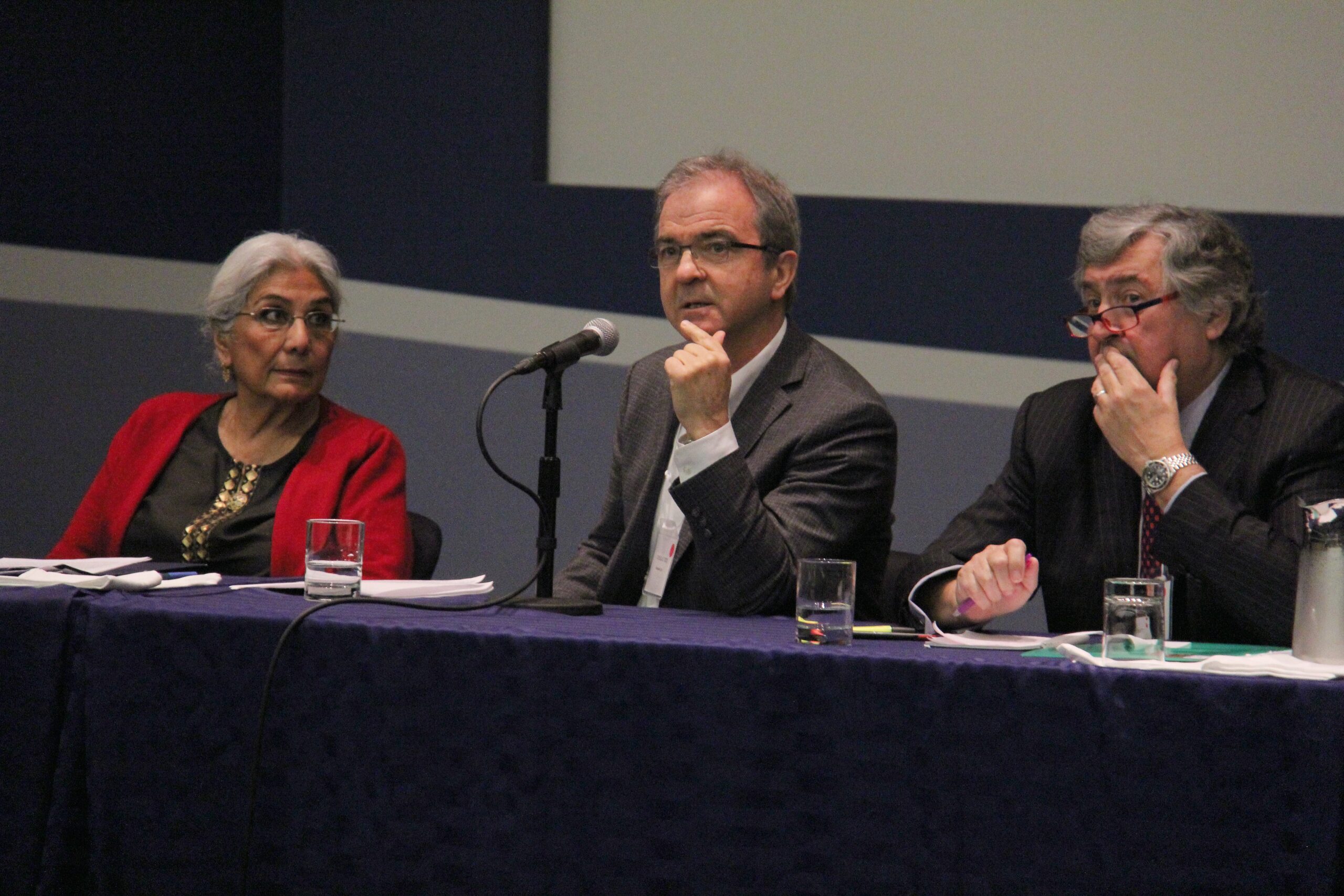
The conference, titled Our Whole Society: Bridging the Religious-Secular Divide, focused on freedom of religion, pursuit of the common good, and reconciliation. It ran March 22-24 at UBC Robson Square.
Marshall, a senior fellow at the Hudson Institute’s Centre for Religious Freedom, said dialogue must begin with defining religion and secularism. “There is no agreement on criteria for religion,” he said.
If Buddhism, which does not necessarily require belief in a deity, is a religion, he argued, Confucianism, secular humanism, or even fascism and communism could also be awarded “freedom of religion.”
“We can define it broadly and include a lot of other movements, which can also be called secular, or we can say: we defend religion, but we are going to defend aspects of thought and conscience in a similar way.”
He took no definite stand on how Canada could approach the issue.
Alia Hogben, the executive director of the Canadian Council of Muslim Women, spoke strongly in favour of secularism.
“Ideally, this is what should happen. I think we need both the freedom to practise religion, but also the freedom to distance ourselves from any religious beliefs,” she said.
Hogben, a Muslim, advocated for Canada as a secular state which would itself be non-religious and impartial to all religions while protecting citizens’ freedom to believe what they wish. “I don’t think secularism should be dismissed as anti-religious.”
However, she added, “We should ensure that universal human rights should be the fundamental values that should override some religious teachings.”
Conference chairman Geoffrey Cameron, a researcher with the Baha’i Community of Canada, pointed out where this country’s sense of human rights came from.
“Our idea of human rights can be traced to religious traditions of thought that maintain the sacred and intrinsic worth of human life,” he wrote, in a statement published in the Vancouver Sun, with the Rev. Karen Hamilton, the general secretary of the Canadian Council of Churches.
“It is a fantasy to expect religion will be removed from public life … taken too far, the removal of religion from all public discourse threatens to marginalize large groups of people and discourage the significant public work of religious organizations and volunteers.”
Panelist Doug Todd, the Vancouver Sun religion, spirituality, and ethics columnist, spoke strongly in favour of satire.
Satirists “use exaggeration, humour, and irony, and sometimes they are quite barbaric, but often their criticism zeroes in on truths others are too polite to mention,” he said, referring to Stephen Colbert and the editorial staff of the controversial Charlie Hebdo magazine.
“It’s worth defending the right to offend. That’s secularism, that’s free speech, that’s pluralism, that’s democracy, that’s healthy debate, and I think it should be part of multiculturalism.”
Other speakers included religious freedom ambassador Andrew Bennett, Regent College professor John Stackhouse, and heads of several charities and Christian, Jewish, and Sikh congregations. Attendees numbered 135.
Marjeta Bobnar, the ecumenical and interfaith relations coordinator of the archdiocese, found most conversations hopeful. “I had the impression they are in favour of religion having a voice in secular society.”
She added closing speaker Doug White “underlined something that is very close to my life: love. We can tolerate each other when we are different, but love goes beyond tolerating each other. That was the answer I was waiting for.”
Our Whole Society was first held at McGill University in Quebec in 2013. Cameron said there are tentative plans to host a similar conference in Ottawa in 2017.