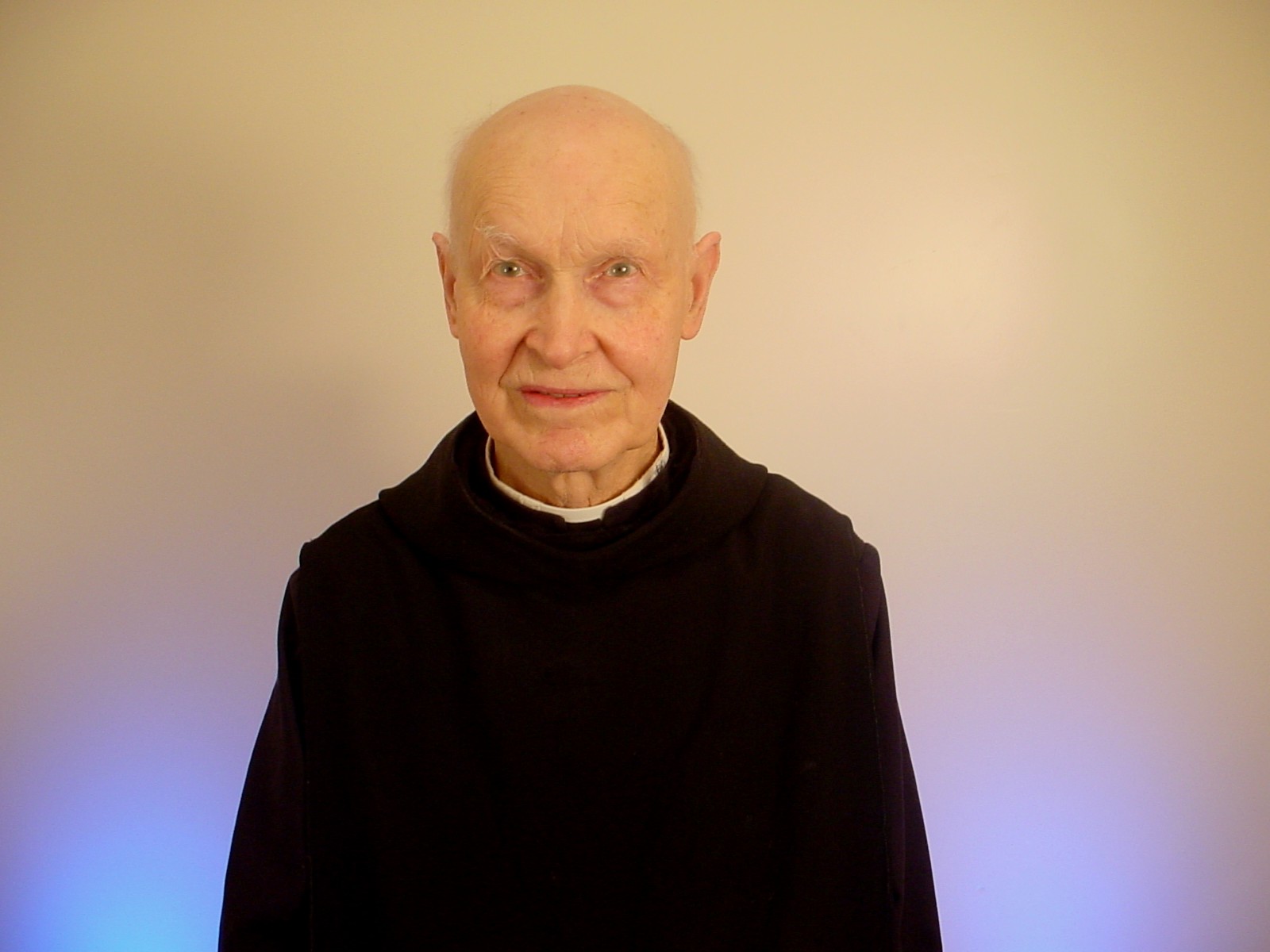

VANCOUVER—A humble, unassuming monk who navigated bomber planes during World War II before entering the monastery died March 2. Brother John Dunne, OSB, was 94.
“Brother John was a quiet, gentle, noble, refined person,” said Father Placidus Sander, OSB, who met him when the brother entered Westminster Abbey 65 years ago.
“He had the most even-keel kind of temperament that I have ever experienced. Nothing surprised him.”
Brother Dunne was one of five children born to farmers in Spillimacheen, B.C., a tiny town southeast of Golden with a few dozen residents. After high school, he spent a year on the farm before becoming a navigator in the Royal Canadian Air Force.
He was stationed in Egypt for a long period. His only brother was killed in action. After the war, he returned to the farm and wrote a letter to the Benedictine monastery, asking about becoming a brother. He entered in 1949.
Brother Dunne was put in charge of the monastery’s farm and, thanks to his upbringing, had a way with dairy cows and cats.
“He was very meticulous about his work, very attentive,” said Father Benedict Lefebvre, OSB. “He looked to the good of others in a quiet, background way.”
In 1967, Brother Dunne and another brother enrolled in cooking classes to take over from German sisters who had staffed the kitchen but had to return home. Brother Dunne, ever with an eye for detail, became a bread and pastry expert. He also took up sewing to mend clothing and dishtowels.
“He had a sense of poverty that was unique,” Father Sander recalled. “His cassock was patched here and patched there,” often with pieces of fabric older than his own torn habit.
It was fitting that he chose St. John the Baptist as his patron saint when he entered Westminster Abbey, the monks agreed.
In the 1960s, after the Second Vatican Council, the brothers at the monastery were given the opportunity to become voting members of the community.
“Brother John decided not to take that step,” Father Lefebvre said. “He was happy to be a monk even though he did not have a vote. He chose not to have that position of responsibility; he was content to be in the background, doing humble work.”
Brother Dunne was precise, down to setting the table to the individual likes of his confreres, setting this particular cup here, that particular knife there.
He also loved to read, and impressed the monks with his extensive knowledge of history. “You had to sit down to really get to know him,” said Father Lefebvre.
Toward the end of his life, Brother Dunne slowed down but kept working, washing pots and pans and quietly setting tables. The monks helped him move to the infirmary.
“When they were taking things down for him, he said, ‘No, I won’t be needing that; no, I won’t be needing that,” until very little was left, Father Sander said. Brother Dunne took even less when he went to the hospital with pneumonia.
After more than a week, he returned from the hospital, wanting to die at home. He asked another brother to help him get ready for Mass the next morning before falling asleep March 1.
The next morning, “Brother Joseph came in but found that instead of going to Mass, Jesus had taken him to the heavenly banquet already,” Father Sander said. “He died just the way he was: so unassuming.”
Father Lefebvre agreed. “Jesus said he who is faithful in little things is faithful in great things.”