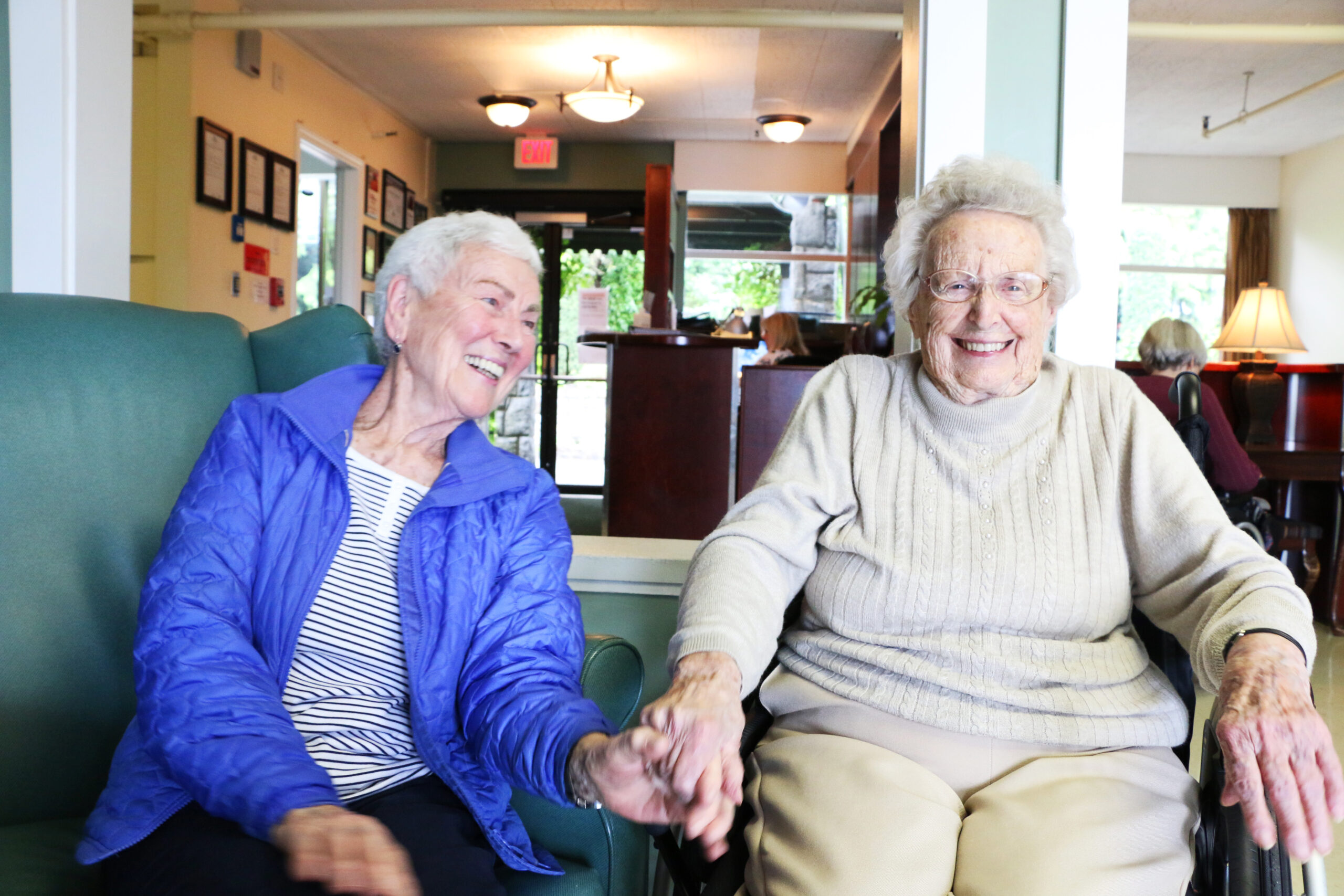

WEST VANCOUVER—Life walks a slow, steady pace down the pale green hallways of West Vancouver Care Centre. So does Ontario-born Marian Welch, 99, with her friend Elaine Moonen.
Welch’s husband died last year, and it’s been hard for her to live at the care centre without him. “We used to have Grey Cup parties” with Elaine and her husband, Fred, she said. “Those were the good old days!”
Marian and Elaine share a laugh as they talk about watching the Grey Cup, and about Marian and Jack’s move from Ontario to their ocean view condo in Vancouver 40 years ago.
Marian stays positive, but admits she gets lonely living far from her two children in Hamilton and St. Louis. As she looks forward to her 100th birthday, visits from people like Elaine put a smile on her face.
“When I go visit someone, I think: if I were lying in that bed, what would I want the visitor to do?” said Moonen. She is one of a handful of volunteers with St. Anthony’s Parish visiting group, whose members call on shut-ins at home, whether they sick, dying, or simply lonely.
“As human beings, we need other human beings,” said the retired social worker. “When you’re dying or when you’re sick, you can’t be proactive in that. You depend on other people coming to see you.”
LifeCanada has just launched a program aimed at building a network of volunteers trained to visit people in care homes and hospices. Moonen, who has been visiting lonely St. Anthony’s parishioners for four years, is thrilled with the plan.
“Visiting people who are at the end of life is a good focus because the problem is euthanasia and assisted suicide and letting people know there is an alternative.”
Four years ago, Elaine helped launch an annual Lenten program at St. Anthony’s that brings in various speakers on the topics of suffering, dying, palliative care, and physician-assisted suicide.
“I got involved because there was a need to do something about educating people about the difference between euthanasia and the kind of care you could get through palliative care,” she said. “One of them is a positive end-of-life treatment and the other one is a big, black hole.”
LifeCanada says the Make Time for Life program is not about training counsellors or professionals. “We’re just there to be a presence,” said executive director Natalie Sonnen.
Now that assisted suicide is legal, the pro-life organization’s “most effective response is engaging with the lonely, disabled, ill, and anyone who is vulnerable,” she said. “Just by being with somebody, you can change their life.”
Care for the dying is close to Moonen’s heart; her husband died in a care home seven years ago. “I remember when he was in the final stages, even when he wasn’t able to react very much, the guys who used to play poker with him would come in and just brighten him up,” she said.
Her brother Norvan died of cancer three years later after spending his last days in a palliative care centre in Drumheller, Alta.
“His palliative care was ideal,” said Moonen. With his own room and furnishings, a good view, and compassionate, well-trained nurses, “it was a happy occasion. Family was there 24 hours a day. They came from all over Alberta to visit.”
His death, surrounded by loved ones, prompted her to get the visiting group at St. Anthony’s up and running. It also motivated her to launch with the Catholic Women’s League the parish Lenten series on dying. Those Lenten events cost a $5 drop-in fee, which the parish donates to the Euthanasia Prevention Coalition and a local palliative care centre.
“It doesn’t matter if you’re wealthy or if you’re living in a tent, you still have a lot of need for human contact when you’re dying,” said Moonen. “When I visit people, I feel better after, and I think they feel better, so it’s a win-win.”
This is the first of three parts in a series about volunteers who visit the sick, lonely, or dying.