Dutch cardinal speaks from the experience in his country
CORNWALL, Ont. (CCN)
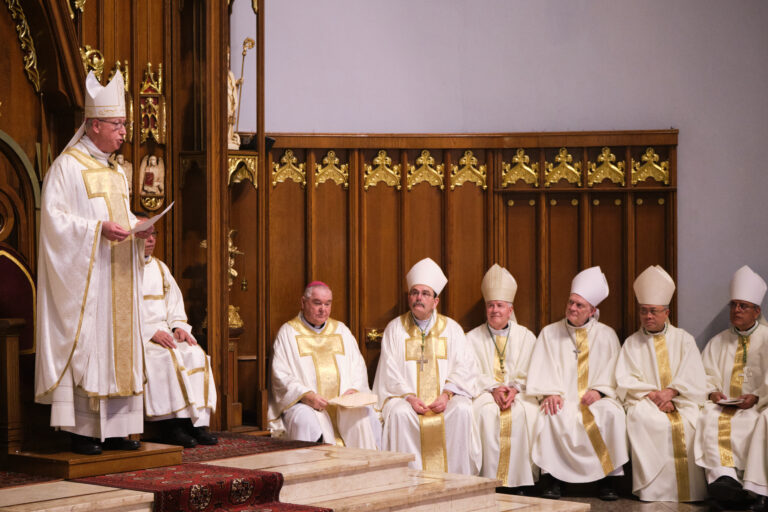
Canada’s Catholic Bishops highlighted the impact and challenges of euthanasia at their annual gathering Sept. 26-30 here.
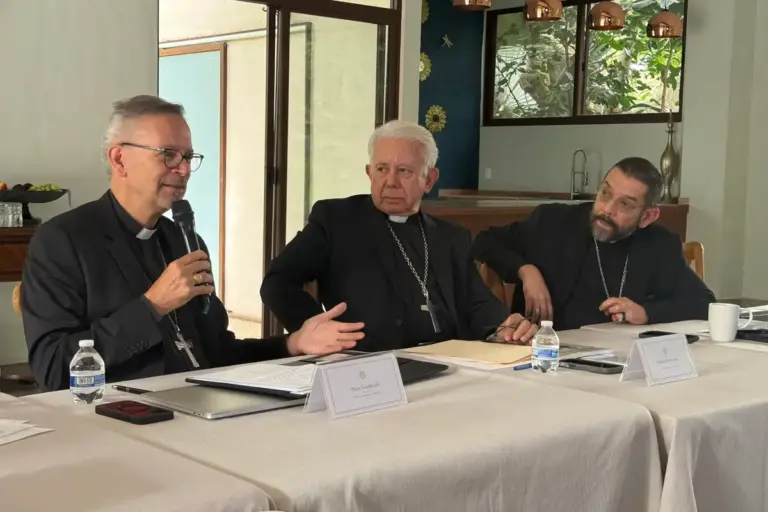
“One must always be aware of the risk of the slippery slope,” Dutch Cardinal Willem Eijk of Utrech told more than 80 bishops and eparchs of the Canadian Conference of Catholic Bishops.
At first, only those at end of life with unbearable physical illness could obtain euthanasia at their request, he said. Then people with non-physical illness or mental illness could obtain one. Then people with dementia who had made an advance request could be euthanized. Now people who have not made requests have been euthanized.
The Dutch have also allowed euthanasia of children, though most of the time handicapped children are killed in utero through abortion, he said.
“When you leave the door ajar, it will always open more,” he said.
In the Netherlands, the debate over euthanasia and assisted suicide began 50 years ago with arguments physicians needed a new set of ethics because medical advances gave physicians too much power to force treatments on people in order to prolong life at any cost, Cardinal Eijk said. The ethics of refusing medical treatment that resulted in a patient’s natural death became conflated with a physician killing a patient in order to remove his suffering.
“No new ethics is needed,” Cardinal Eijk said. Euthanasia and assisted suicide are both intrinsically wrong and they are not the same as the removal of medical treatment in most cases.
In an interview, Cardinal Eijk said Canada’s circumstances are different because euthanasia and assisted suicide have happened so quickly and it is “hard to put on the brakes.”
He said the Canadian bishops must continue to make moral arguments against euthanasia in the public square and continue advocating for palliative care.
Palliative care in Holland was only considered in the late 1990s, he said, but the politician who introduced it said palliative care should include requests for euthanasia. Canadians must fight to make sure its many centres of palliative care across the country remain free of euthanasia.
Cardinal Eijk also urged Canadians to fight for conscience rights. He noted the Council of Europe tried to pass a law forcing physicians to perform abortions, but repeated interventions by European bishops prevented it. In Holland, only about 15 per cent of physicians refuse to perform euthanasia, he said. He has not heard of anyone who has lost a job for refusing to take part in euthanasia, but finding a job may be difficult for one.
The CCCB’s Permanent Council has been working on what pastoral advice to give to clergy, pastors and lay people regarding euthanasia and assisted suicide, said CCCB President Hamilton Bishop Douglas Crosby in the annual president’s address. “Assisted suicide and its ramifications is a major pastoral challenge.”
The CCCB’s general secretary has already circulated directives from the Archbishop of Vancouver and from the Bishops of Alberta and Northwest Territories.
RECONCILIATION WITH INDIGENOUS PEOPLES
The ongoing work of reconciliation with Canada’s indigenous Peoples also remains high on the bishops’ agenda. Bishop Crosby pointed out that while the CCCB never had a role in running Indian Residential Schools, the care of Indigenous peoples has been a major focus of many dioceses and religious orders.
At a meeting of the Bishops of the Church in the Americas last February in Florida, Bishop Crosby said he outlined four major difficulties in this area:
1) The diversity of Canada’s indigenous peoples
2) Their complex economic and social challenges
3) The fact the episcopal conference is not the Catholic Church of Canada nor its national headquarters
4) “The question of religious and social collaboration when so many in our country question, or disown, the good that the churches have done with and among Indigenous People.”
Last March, the CCCB responded to the Truth and Reconciliation Commissions Calls to Action regarding the churches, particularly a Catholic response to the “Terra Nullus” and the ‘Doctrine of Discovery.’
The CCCB also worked with the Canadian Religious Conference, the Canadian Catholic Aboriginal Council and the Canadian Catholic Organization for Development and Peace (CCODP) in crafting a response to the TRC’s Call to show how the churches are bringing their policies in line with the Universal Declaration on the Rights of Indigenous Peoples (UNDRIP).
“Later this week, you will receive a progress report on the proposal for the CCCB to be part of an ongoing ‘circle’ of Catholic parties to continue to focus on Indigenous relations,” Crosby said.
The bishops also be “invited to approve in principle,” a new document to assist dioceses and eparchies in “protecting minors, safeguarding pastoral environments and responding to sexual abuse,” Crosby said. The document is scheduled for release early in 2017. It will replace From Pain to Hope.
DEVELOPMENT AND PEACE
Bishop Crosby noted Development and Peace, the lay-run overseas development agency founded by the Canadian bishops will celebrate its 50th anniversary in 2017, but of more immediate concern “for us is the news from earlier this summer that the new Executive Director hired for Development and Peace a year ago is no longer with the organization.”
Deacon Jean-Denis Lampron, the president of Development and Peace’s National Council, acknowledged many were surprised and saddened by the departure of David Leduc. During the period of probation it became clear his particular competencies did not correspond to the challenges and mandate of the organization, he said.
In March 2017 the present federal government financing will come to an end, he said.
Josianne Gauthier, director of in-Canada programs for Development and Peace, said Development and Peace has developed a new strategic plan focusing on four themes: ecological justice; democracy; peace and reconciliation; and equality between men and women.
The Jubilee Year of Mercy gave the agency time to “rediscover our programs through the lens of mercy and the intricate relationship of love, justice, and mercy.”
Pope Francis’s 2015 Encylical Laudato Si’ gave Development and Peace the arguments for last year’s fall campaign: “Creating a climate of change” and allowed them to “join our voices to the global climate movement.”
The last year “also saw an escalation of terrorist acts around the world,” she said, creating “more death, more pain, more isolation, more war.”
The war in Syria led Development and Peace to join with CNEWA Canada and Aid to the Church in Need Canada to campaign to help Syrian refugees and displaced persons, she said.
Development and Peace contributed to 65 projects in 24 countries that depend on ongoing funding, from the Share Lent campaign, the federal government, and local fundraising efforts, she said.