Retirement relieves the sense of administration, but not the sense of service, says Bishop Monroe
The B.C. Catholic
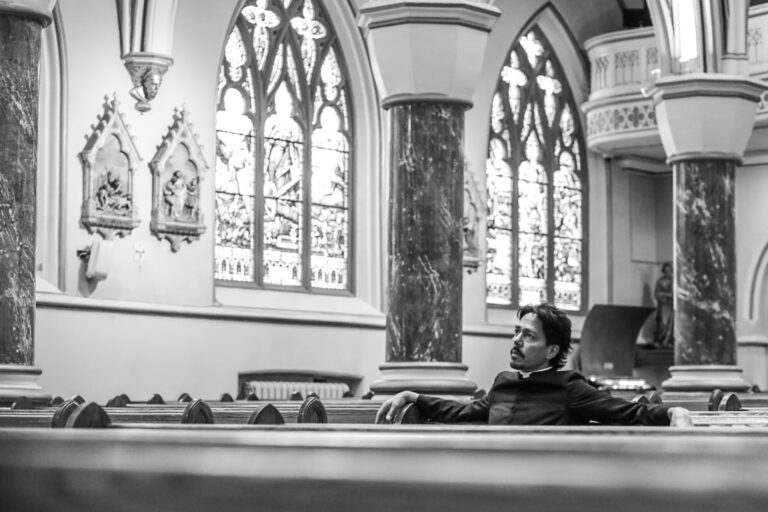
Forty-nine years after being ordained a priest for the Archdiocese of Vancouver, Bishop David J. Monroe of Kamloops has returned home.
Gazing up at the John Paul II Pastoral Centre walls, he examined the pictures of Archbishop J. Michael Miller, CSB, and Pope Francis. “Now I’m back into quite a different chancery office,” he chuckled, reminiscing about his days in Kamloops.
Bishop Monroe reached the mandatory retirement age of 75 and retired this past June. He was succeeded by Bishop Joseph Nguyen in August. Since returning to Vancouver he has moved into the St. Joseph’s Residence for retired priests. The suites are on two of the lower floors in the pastoral centre at 4818 Willow St. in Vancouver.
“The suites for the retired priests were designed very well,” remarked the bishop. “The furniture is made of wood, which makes it all feel more natural. It makes the place feel less like a room, and more like a place to live.”
Though his days in administration as a bishop are over, Bishop Monroe is not done with pastoral work. “People get the impression that retirement means you’re not going to do anything,” he said, “but you don’t retire from being a priest, as you’re always a priest! You don’t retire from the priesthood.”
“What retirement relieves is the sense of administration. Service is one thing, but administration is another.”
Gary Cooper, the financial administrator of the Diocese of Kamloops, noted the bishop’s tireless energy. “I don’t think I can overstate the commitment Bishop Monroe had,” Cooper told The B.C Catholic. “He spent hundreds of hours in his car travelling hundreds of thousands of kilometres across the diocese. It was really something to witness, because he was relentless.”
Cooper, who worked with Bishop Monroe for all his 14 years as Bishop of Kamloops, recalled a recent conversation with the bishop regarding his retirement. “Going into retirement is not very easy for many people, but because of the opportunities that exist for him in Vancouver, he will be able to carry on his pastoral work without the responsibilities of a bishop.”
The bishop prepared for the next chapter of his life somewhat reluctantly, Cooper thought, but “I think he’s finally reached that point of letting go and moving on to this next chapter of his life, which I think will be very enjoyable for him.”
“There never was a time when he would turn down someone who came to the chancery door or called him,” said Adele Huculak, Bishop Monroe’s former secretary. “He never denied any access to anyone, and had such a servant heart.”
Bishop Monroe admitted his overall plans for retirement were still not set in stone, but he wished to offer his services. “I’m open to whatever help (the archdiocese) needs me for.”
One of the areas he hoped to offer pastoral help was by celebrating “Mass for deaf people, which I did (previously) for about 30 years in the archdiocese. Other than that, I understand there will be a request for hospital pastoral help near the chancery office.”
“Priests will be asking if I can replace them for holiday or sick leave,” Bishop Monroe said. “That will all come under what the archbishop will ask of me, or my request to him, but I’m here.”