Pastoral care helps the dying reconcile and the family grieve
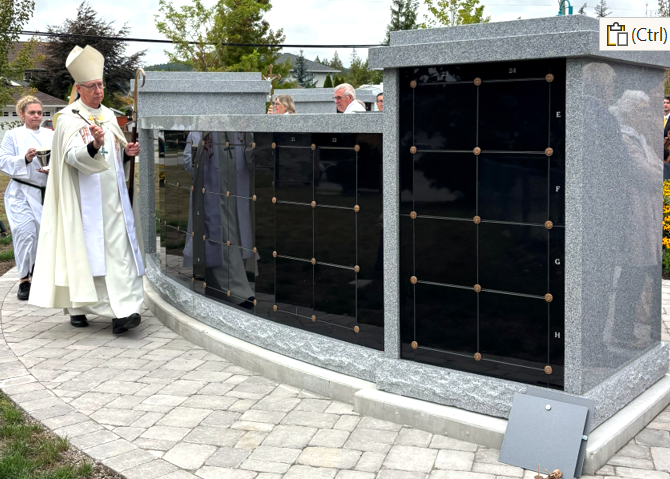
After years as the director of Catholic Cemeteries in Vancouver, Peter Nobes has suddenly found himself receiving the compassionate services his ministry offers to others.
Nobes, who oversees four B.C. cemeteries, recently had to fly to Ontario twice for the deaths of his in-laws within five months of each other.
His mother-in-law Janine Dalecki, 83, died of cancer in September, and his father-in-law John, 92, died in January.
“It’s very sad. I don’t get to talk to them again in this world,” said Nobes.
His wife’s Polish parents had a rich past. John fought in the Second World War. Janine, after overcoming tuberculosis, decided to become a nurse. The pair immigrated to Canada in the 1950s, John becoming a farmer and then working in the auto industry, while Janine stayed in the medical profession as a nurse’s aide.
Nobes married into the family 20 years ago. Then, a couple of months ago, he found himself needing the very services he has been providing B.C. families since 2013.
“I found both funerals beautiful,” he recalled. “There was mercy there, and joy, and grace.”
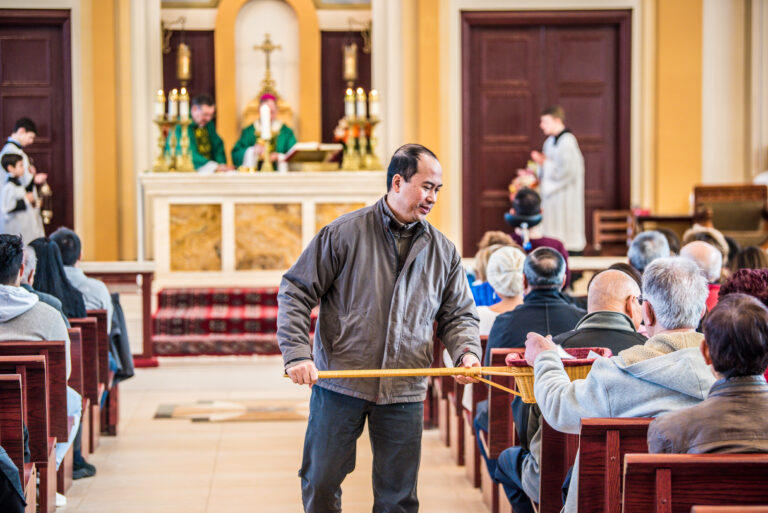
John’s funeral left a profound impression on him from the very start when a procession of Knights of Columbus carried the casket and served at the altar even though John had never been a Knight.
“It brought a nice air of dignity,” Nobes said. “That particular council offers this as a service. They are pallbearers when there are not enough people to do it.”
Nobes’ 16-year-old son served as a pallbearer alongside the men in regalia. “I had my kids there. For them to experience it was a healthy thing, long term. As a family, we experience it together. It brought closure.”
Nobes was also pleased baptismal candles and incense were used during the funeral Masses of both of his in-laws. But what perhaps moved him the most was the pastoral care his in-laws received before they died.
It makes a real difference “when you have a relationship with your pastor and your community,” he said.
His in-laws were visited by Sister Mary Boere, CSJ, and a priest, first at home, and then at a long-term care facility John had moved to.
For the final year and a half or so of their lives, John and Janine had Sister Boere come to their home to talk with them and bring them the Eucharist.
“It’s important to be with them, hold their hands, and tell them that we love them and thank them for their lives and what they have done,” Sister Boere said in a phone interview.
“I try to encourage the family to be grateful, but also encourage the person who’s dying – that they can cast out all fears, all anxieties, and give it all to the Lord.”
Sister Boere was a teacher until she retired in 1996 and now serves at a community of parishes in St. Thomas, Ont., making hospital visits two or three times a week.
She acts as a “go-between” who connects priests with the sick and dying and their families. “The priest can come and give them the sacrament of the sick and that, too, gives them great comfort.”
Most families who ask her to pray with them are Catholic, she said, though some have not gone to Church for a long time. “They are grateful for the support.”
Nobes said in addition to the sacrament of the sick and Sister Boere’s constant visits and prayers, he was encouraged when a priest came to offer the sacrament of reconciliation. In his last year of life, he said John had a good confession and was able to die in peace, reconciled to his family and to God.
“They’re at a place of rest and we hope for the resurrection,” he said. “I came to a sense of peace, as did my wife.”
Nobes plans to take some of what he has learned to the cemeteries he is in charge of, starting with making more resources for grieving families available on his website.
“It’s not the end. We know that our soul is immortal. I take comfort in that.”