
OTTAWA – In the face of persistent assaults on religious freedom and its place in the Canada’s public square, the Christian think tank Cardus has established the Cardus Religious Freedom Institute.
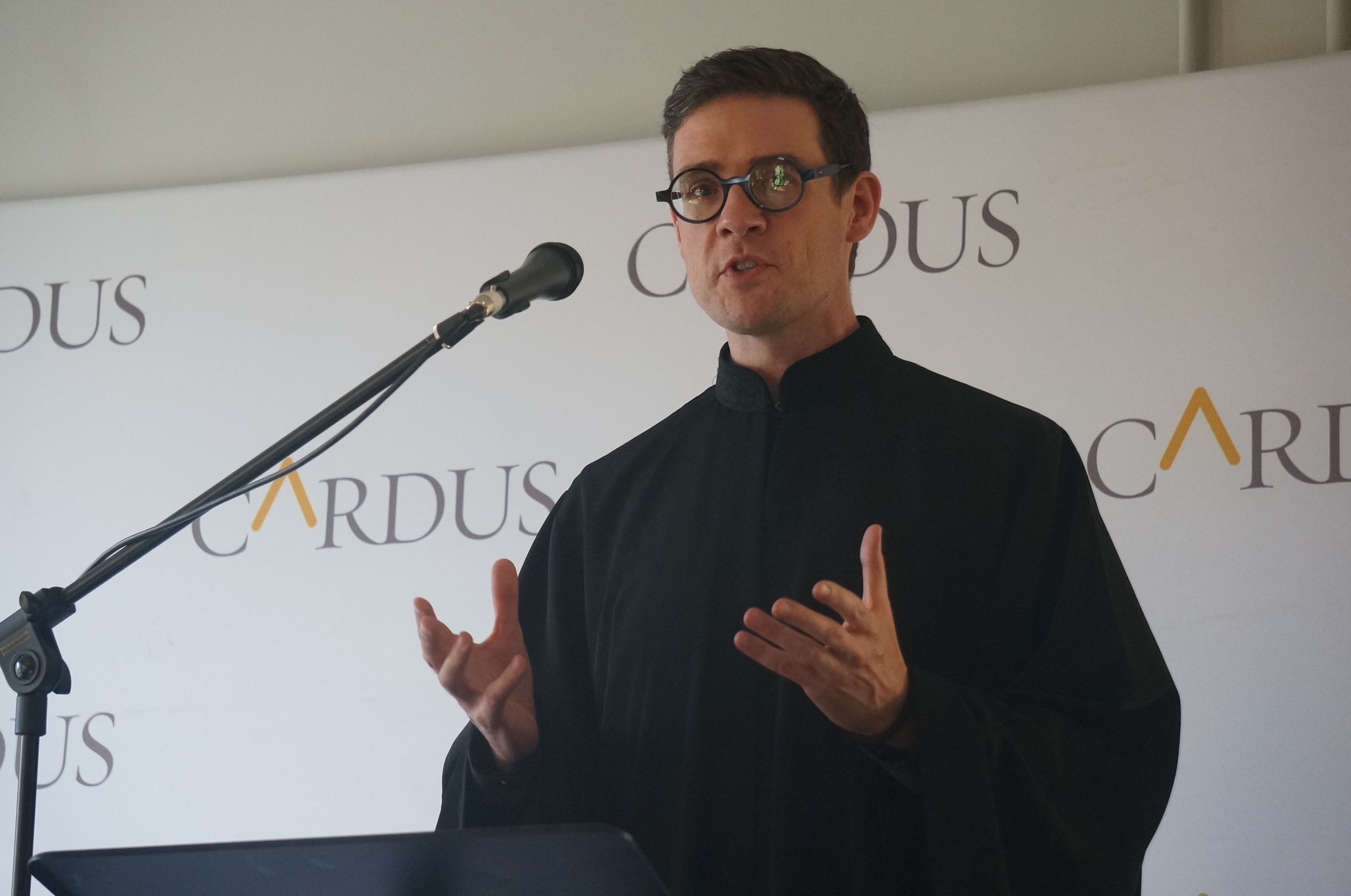
Father Deacon Andrew Bennett heads the initiative, which is tasked to “re-present” why religious freedom is important, “not only for Christians but for all people.”
“If we can’t live out our faith in the public square, how do we built a truly
pluralistic Canada,” said the former Ambassador of Religious Freedom at a
pre-launch reception May 8.
Father Deacon Bennett described an “amnesia” about the contributions of faith communities to
Canada’s common life. The Ukrainian Greek Catholic deacon said Catholics “are
exhibit A.”
“We have bought into the Enlightenment myth that religion is a private matter,”
he said. “Our baptism is not a private matter. We are called to live it out.”
But living it out has become more difficult in both in Canada and elsewhere
around the world.
Co-founder and president of Cardus,
Michael Van Pelt, said when he and Ray Pennings founded the think tank in 2004
“religious freedom was not the order of the day.”
“Sadly, now it is,” he said.
In a global context, 79 per cent of the world’s population live in countries
where religious freedom is severely curtailed by governments or by social
hostility, Van Pelt said. “That’s a 10 per cent increase since 2009.”
One out of 12 Christians world-wide are either persecuted by their governments
or by social violence, he said.
And while Canadians have much to be grateful for, “our freedoms need to be
attended to to prevent backsliding or even open contempt,” he said.
Pennings said the initial concern in founding Cardus was to help Christians
occupy their place in the public square, to equip them with arguments from
2,000 years of Christian social thought.
But the culture has changed, he said. “Not only do we need to occupy this
space; we need to defend it.”
“Faith is not just a private matter,” he said. “Religious freedom is not
something the government gives to us. It comes from our very creation.”
The Institute hopes to regularly replicate something similar to a gathering of
70 youth from different faiths and backgrounds who convened as part of Faith in Canada 150 to
mark Canada’s 150th birthday.
These young people were given questions to ask those of other faiths, and
encouraged to share openly about their differences, Father Deacon Bennett said.
The Institute wants to replicate that event to “tell young people that no
matter what the zeitgeist, you can be faithful publicly and be witnesses to
that faith,” he said.
The institute will also offer policy advice to governments on how to respond to
religious freedom violations overseas and liaise with religious freedom
scholars elsewhere in the world.
The Institute will publish policy papers and released one May 9 tracing the
history of religious freedom in Canada.
That paper starts with the Quebec Act of
1774 that granted Catholics civil rights “for the first
time in the whole British Empire,” Father Deacon Bennett said. It looks at the darker
side of religious freedom, such as the banning of the potlatch ceremony of
Indigenous Canadians and the legacy of the residential schools. But it
also looks at the fact many First Nations peoples are “deeply Christian,”
something that gets overlooked today, he said. And the paper talks about
the key religious freedom cases that have come before the Supreme Court of
Canada, including the Trinity Western University law school case that is yet to
be decided.
Starting in 2019 it will begin a series of training modules on religious
freedom.
These modules, meant to train the trainers, will explain what religious freedom
is, show ways to further it; and help people to live with others with
profoundly different beliefs, Father Deacon Bennett said.
Canadians are known to be very polite, he said, “But sometimes this can be
a vice.”
Because of politeness people do not engage because of sometimes sharp
differences, he said.
The way to engage these differences is to always recognize the image of God in
the other person, Father Deacon Bennett said, noting advancing human dignity would be the
“touchstone” of the Institute.
“We are not objects; we are subjects,” he stressed.