
Nearly a quarter of Canadians face serious social isolation and loneliness, and the solution lies deeper under the surface than we might think.
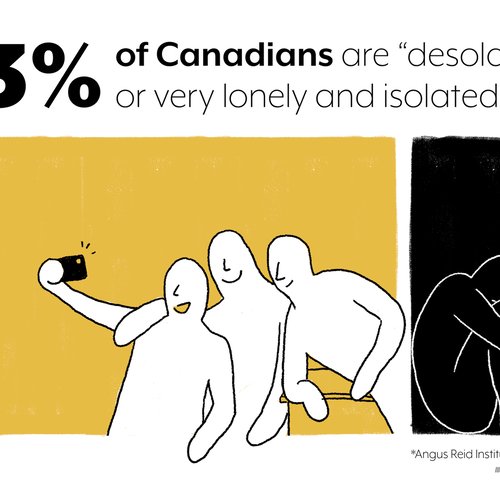
This June, a study from the Angus Reid Institute revealed 23 per cent of Canadians are “desolate,” or very lonely and isolated. It found 33 per cent of respondents were not sure if they could count on friends or family members for financial help in an emergency, and the same went for 18 per cent when it comes to an emotional crisis.
Forty per cent of Canadians say they sometimes or often wish they have someone to talk to, but don’t.
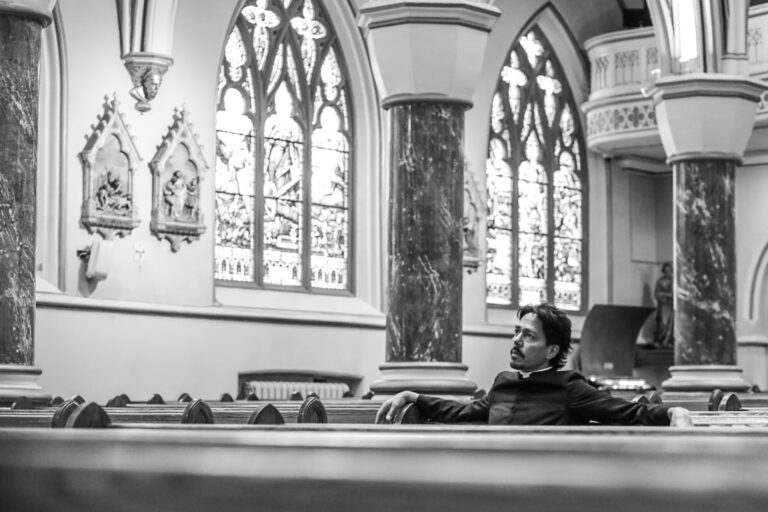
The solution is deeper than simply increasing community programs. According to Deacon Hilmar Pabel, the numbers reveal we need to dig into the past and rediscover the art of friendship.
“Something happened between the first century B.C. and our own time,” Deacon Pabel, a history professor at Simon Fraser University and permanent deacon for the Archdiocese of Vancouver, told The B.C. Catholic. He recently gave a talk in Vancouver on friendship.
“In the 11th and 12th century, and onwards, this idea developed … which romanticized and sexualized love. When we use the word ‘love’ today, we reserve that for our sweetheart, our spouse, our children, and our parents if we get along with them. Nobody else.”
But human beings are wired for relationship, including friendship – not a lower form of relationship below marriage and devoid of intimacy, but its own valuable category.
“There are so many people who need to hear those words: ‘I love you.’ And they need to say them. If we reserve love only for a romantic relationship or relationship with our children, then there are so many single people and lonely people who will never hear those words.”
Ancient philosophers, including Plato, Aristotle, and Cicero, placed considerable weight on friendship (with Plato and Cicero each dedicating entire writings on the subject). Plato, in Lysis, put these words in the mouth of Socrates: “All people have their fancies; some desire horses, and others dogs; and some are fond of gold, and others of honour. Now, I have no violent desire of any of these things; but I have a passion for friends; and I would rather have a good friend than the best cock or quail in the world: I would even go further, and say the best horse or dog. Yea, by the dog of Egypt, I should greatly prefer a real friend to all the gold of Darius, or even to Darius himself.”
Their ideas are dated and can be difficult to read nowadays, Deacon Pabel admitted. Modern readers will take offence at old ideas that true friendships can only happen between men, or wonder if some teachers, writing so powerfully about their intimate friendships, might secretly be lovers. But there is something to be gained from rediscovering of the value of chaste friendship.
“You hear all those songs on the radio about people who break up and say: ‘Can’t we be just friends?’ As if it were a consolation prize,” said Deacon Pabel. “No, to have a friend is a gift! Someone who takes the time of day to listen to me or to be my friend, even if she or he disagrees with me on some things, or who stays my friend even when I lose my temper, that’s God’s love working through someone else.”
That’s why the ultimate example of friendship, Deacon Pabel said, is Jesus Christ. “No greater love has no one than this: to lay down one’s life for one’s friends,” he said.
“We need to reclaim friendship as an important form of love, the love that Jesus offers us.”
That means not being embarrassed to express love to people besides spouses and immediate family. It means offering friendship to people who are single by choice or circumstance. It means seeing friendship “as God’s gift,” said Deacon Pabel.

Canadians have “lost the ability to be close to each other,” often because they think of intimacy as sexual. But getting hung up on romantic relationships can lead to an “idolatry of marriage,” he said.
“When we have a friend, when we find someone who is like a second self, we say, ‘Wow, there is someone in the world who gets me.’ That’s amazing.”
The Angus Reid Institute’s findings also offered a little encouragement to church communities. The June survey found people who are more religiously active are “less likely to experience isolation.”
Twenty per cent of people in the Not Isolated category (22 per cent of all respondents), attend religious services once a week or more, while only eight per cent of the Very Isolated do. That shows religious attendance can help ward off loneliness and isolation, but does not banish it completely.
“Knowing that we have the intimate love of Jesus can help our loneliness, but people still need people around them,” said Deacon Pabel.
“It’s not enough to say: ‘Jesus loves you, bye!’ It’s to say: ‘Who are you? How is Christ alive in you? How do I see Christ in you and you in me? Can we be friends, brothers, and sisters, because Jesus calls us to be?”
Deacon Pabel’s presentation on friendship was one event in a series of free bi-monthly talks and lectures called Into The Deep. The next two events will focus on reconciliation with First Nations people (Sept. 20), and the importance of community for people facing mental health challenges (Nov. 22). More information here.