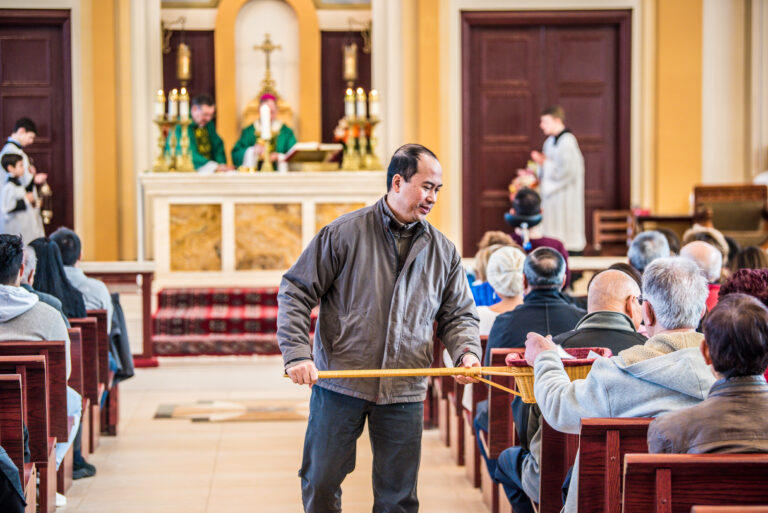

OTTAWA—Catholics in Canada are being called upon this Wednesday to offer spiritual and material support to other Christians being persecuted around the world.
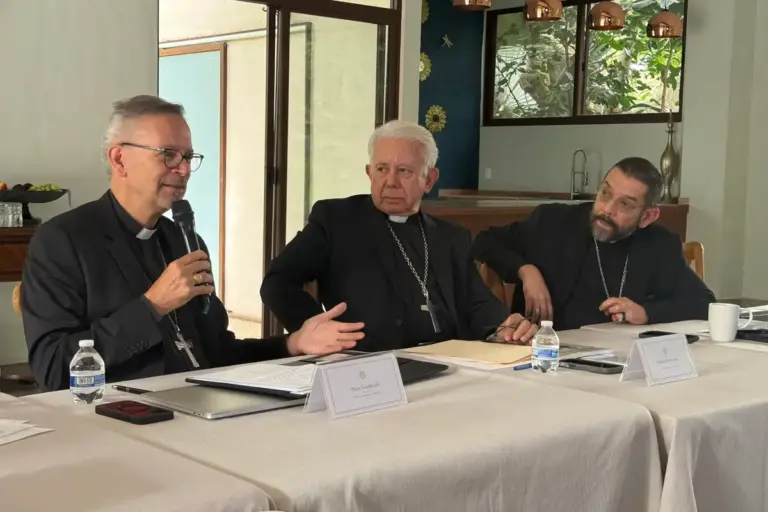
The Conference of Canadian Catholic Bishops, through its Peace and Justice Commission and in association with Aid to the Church in Need Canada, is raising awareness about the persecution of Christians globally. In a new document entitled In His Name: Statement on the Persecution of Christians, the CCCB says the issue is of particular concern in areas where Christians are a clear minority.
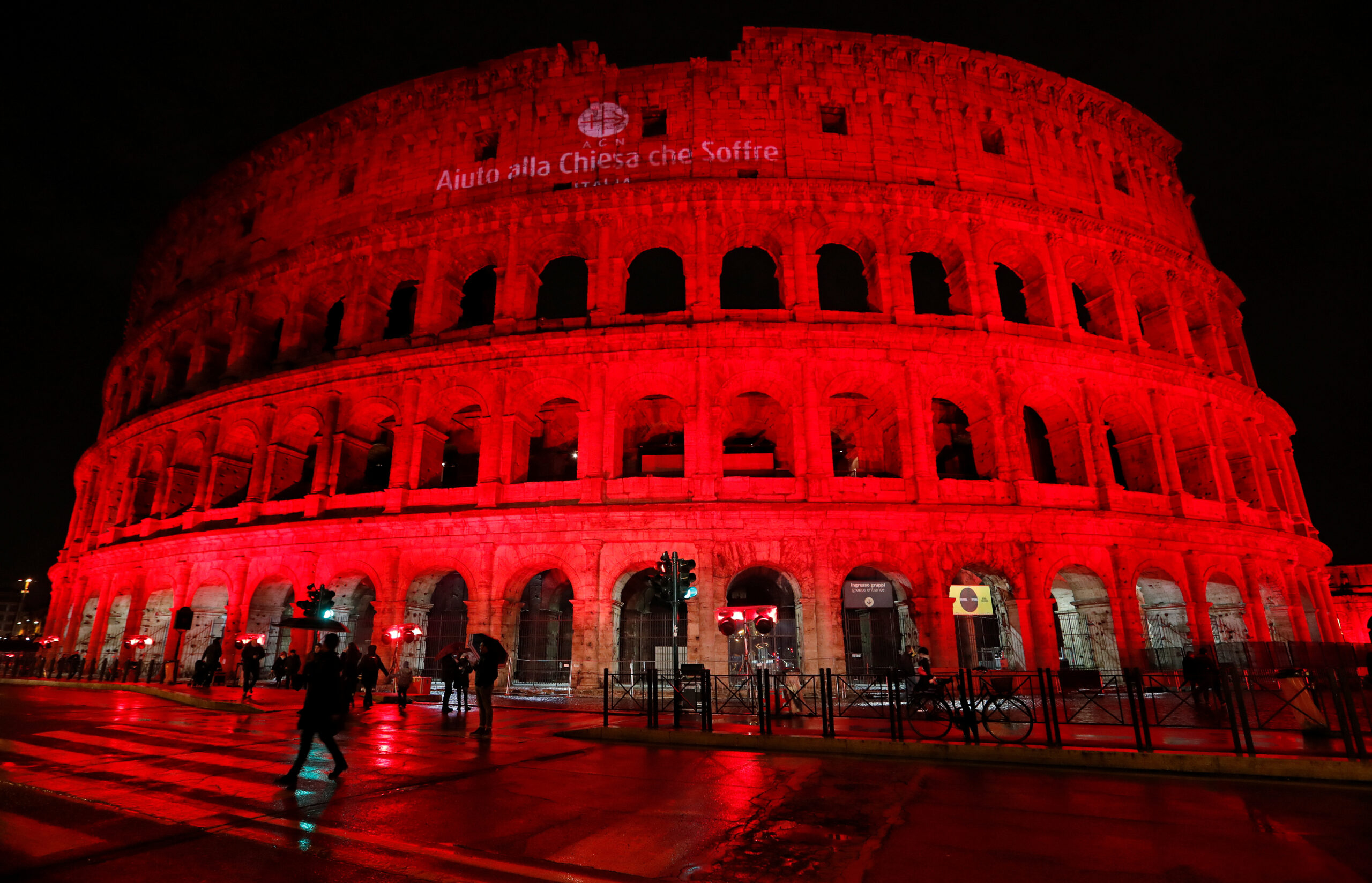
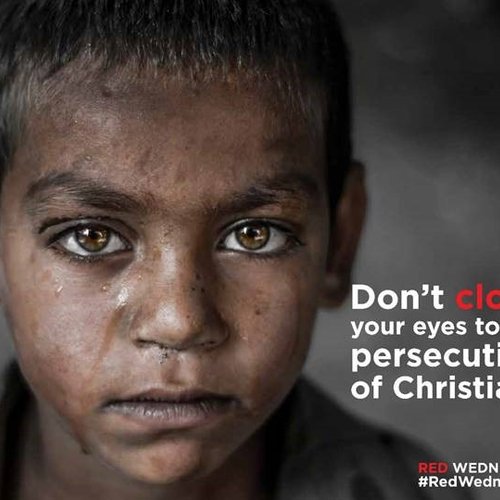
Although persecution of Christians has always been an ongoing concern, the timing is right for the CCCB statement. Communications coordinator Lisa Gall said the statement is intended to draw attention to Red Wednesday, Nov. 20, dedicated to combating persecution of Christians.
Aid to the Church in Need Canada is calling on parishes to do what they can on Red Wednesday to foster prayers and support for the more than 300 million people around the world who are “touched by persecution to varying degrees.”
Aid to the Church in Need Canada suggested Masses, vigils, and Rosaries as appropriate ways to pray for persecuted Christians.”
The CCCB document said, “persecution is defined as ‘a program or campaign to exterminate, drive away, or subjugate people based on their membership in a religious, ethnic, social, or racial group.’”
“It would be tempting to imagine that such actions no longer occur today. However, sometimes a particular idea can push persons or groups to fanaticism, leading to campaigns to ‘exterminate, drive away, or subjugate’ those who do not share these ideals. This fanaticism can take on religious, political, or ethnic expressions,” the CCCB statement said.
“In the news today there is no shortage of such events. Faced with this exclusivist way of thinking, religious freedom is suppressed. This statement is addressed to the Catholic faithful in Canada who, owing to the relative lack of religious persecution in our country, may not be concerned with this phenomenon.”
The CCCB said the persecution of Christians is more relevant than ever.
“The idea may conjure up in our minds images of Christians being thrown to the lions, and it is true that there have been persecutions from the very beginning of Christianity. Yet the pace of persecution has accelerated such that the 20th century saw more persecuted Christians and martyrs than the 19 preceding centuries combined. Today, no fewer than 327 million Christians live in countries marked by religious persecution.”
The statement said persecution of Christians can take many different forms, such as intolerance where Christians are portrayed negatively in the media and in social circles, discrimination in which Christians are treated differently than others and to the most extreme forms of persecution that can even lead to death.
“We see this when Christians are singled out for arrest or detention, sent to work camps, tortured, and even killed,” the CCCB said. “In its most extreme form – where it is directed toward completely eradicating Christians from a region – we can even speak of genocide. According to Aid to the Church in Need, what took place in Iraq in 2014 was a genocide against Christians as well as Yazidis,” the CCCB said.
There are three main culprits behind the persecution of Christians, according to the CCCB report: governments (communist or authoritarian), other religious groups such as radical Islam, and ultra-nationalist movements which demand that their country be of only one religion.
But while millions of Christians around the globe face varying degrees of persecution for their perceived crime of having faith in Christ, there is also hope because “where there is persecution, there is often a strong and vigorous faith,” the CCCB said.
The CCCB said that while the environment for Christians in Canada is a lot different than for others Christians around the globe, there are still issues to be addressed such as how Christian viewpoints are often marginalized when it comes to public debate. For example, issues that are important to many Christians were considered controversial in October’s federal election campaign.
“Being knowledgeable about the condition of persecuted Christians can help us to change their reality; we can become a voice for those who suffer in silence,” the CCCB statement concludes.
“We can make their cry heard, a cry that is also a call to solidarity with all people. Finally, our persecuted brothers and sisters count on our help in navigating their trials. In this regard, we can bring them pastoral and material assistance. Pastoral assistance is very important, since very often their faith is the source of their courage and is their only hope.
“Material assistance does not solve the problem of discrimination or persecution, but it allows persecuted Christians to survive.”
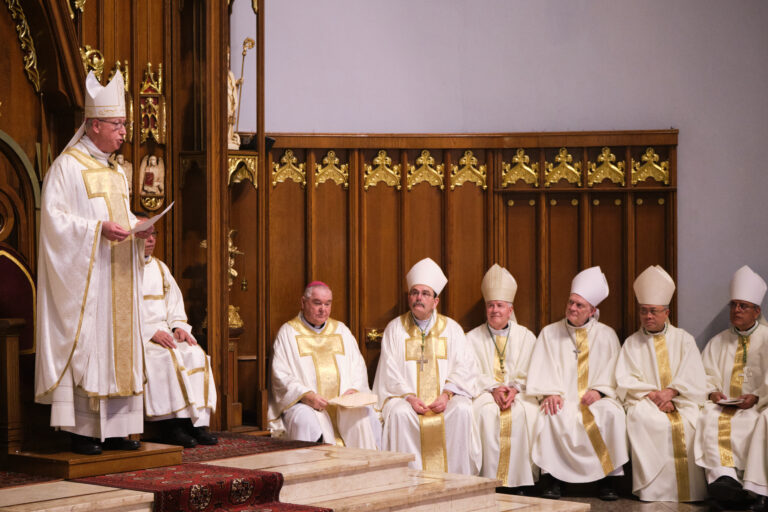
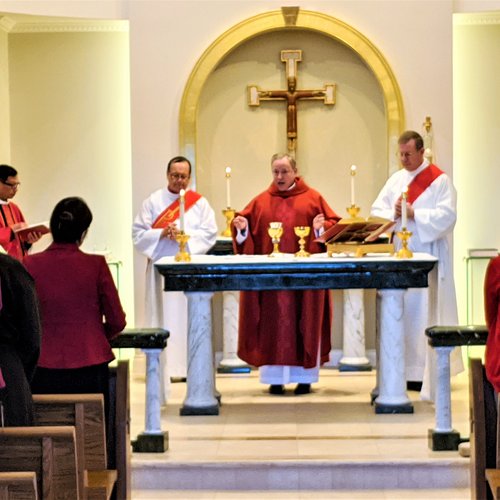
At a Red Wednesday Mass at the John Paul II Pastoral Centre, Archbishop Miller delivered the following homily:
As you have heard, today in Canada we are marking “Red Wednesday,” a day sponsored by the papal charity, “Aid to the Church in Need.” Its purpose is to highlight the persecution suffered by Christians, while at the same time promoting respect between followers of different religions. It is also a day to encourage people to take a stand on defending religious freedom.
The mainstream media give little coverage to the persecution of Christians, unless something spectacular occurs. Being knowledgeable about the condition of our persecuted sisters and brothers can help us to alleviate their situation. We can – and should – become a voice for those who are suffering. We can make their cry heard, a cry that is also a call to solidarity with them.
Despite what we may be tempted to think, concern for the persecution of Christians is more relevant than ever. The word “persecution” may conjure up in our minds images of Christians being thrown to the lions, and it is true that there have been persecutions from the very beginning of Christianity.
St. Paul wrote to the Philippians, as we heard, that they were blessed not only to believe in Christ but to suffer for him as well (cf. Phil 1:29). And in the selection from John’s Gospel that was read, Jesus minces no words at the Last Supper about his own fate and that of his disciples: “Remember the word that I said to you, ‘No servant is greater than their master.’ If they persecuted me, they will persecute you” (Jn 15:20). And so they have and so they do – only the “they” changes through the ages and the reasons for it. “The persecution of Christians is always the same: people who do not want Christianity feel threatened and thus they condemn Christians.”[1]
The pace of persecution has so accelerated down through the years that the 20th century saw more persecuted Christians and martyrs than the 19 preceding centuries combined.
Currently, 327 million Christians live in countries where there is religious persecution. Another 178 million live in countries where there is discrimination. This makes a total 505 million Christians who are at risk. Although it is difficult to keep a precise count, “Aid to the Church in Need” believes that 75% of all religiously motivated violence is perpetrated against Christians.
It is impossible to discuss persecution without considering those who carry it out. In this regard, we can consider three groups: governments (communist or authoritarian); other religious groups (e.g., radical Islam); and ultranationalist movements which demand that their country be of only one religion.
Recently, for example, in the Middle East, since 2003, the number of Christians in Iraq has dropped dramatically. From 1.3 million, they are now less than 200,000. In Syria, there were 1.7 million Christians before 2011; today, only about 450,000 are left. The atrocities committed against Christians in Syria and Iraq are so horrific that words cannot adequately respond, and their plight must not be forgotten. In Lebanon, the number of Christians is decreasing from year to year, representing about 20% of the population, compared to nearly 40% about forty years.
There is also increasing persecution of Christians in India and China, as well as in many countries in Africa.
Sometimes what provokes persecution is the fact that Christians are living out the prophetic mission they received in Baptism. In these instances it is the expressions and actions of Christians that are themselves provocative, destabilizing, and disturbing. In our world today, to defend the right to life, to oppose euthanasia, to foster social justice and the rights of conscience can lead to discrimination, persecution and even martyrdom.
Our situation in Canada is certainly different from that of our persecuted Christian brothers and sisters around the world. Here, many of us feel uncomfortable being Christian in a world where religion is accorded a shrinking role in the public square. Our discomfort comes from the fact that our values are different from those of contemporary society.
We must raise awareness of discrimination, if not outright persecution, against Christians even in regions where public opinion would normally not expect this to exist. Even in Canada, to act and speak out publicly as a committed Christian in one’s professional life has never been more threatened. Christians, as well as others, should therefore be allowed to express publicly their religious identity, free from any pressure to hide or disguise it.
Such discomfort with or, indeed, opposition to any public role of religion lies behind what Pope Francis has referred to as the “polite persecution of Christians.” Under the guise of “political correctness,” Christian faith and morals are now considered to be hostile and offensive, and therefore, something to be removed from public discourse. This fear of Christianity playing its legitimate role in the public square betrays a view of the freedom of religion or belief which would confine it merely to the freedom of worship. Against such a trend, the Holy Father has affirmed that: “Religious freedom certainly means the right to worship God, individually and in community, as our consciences dictate. But religious liberty, by its nature, transcends places of worship and the private sphere of individuals and families. Because religion itself, the religious dimension, is not a subculture; it is part of the culture of every people and every nation.”[2]
We should rejoice in this challenge because it is precisely in this way that we are prophetic-missionary disciples. When faced with the treatment we receive, let us do so with courage, respect for truth and dialogue.[3]
Let us now turn and pray for all those who are suffering persecution for their belief in Christ and the Gospel, asking for an outpouring of the Spirit to bear witness to the truth on their behalf.
[1] Francis, General Audience (19 September 2019).
[2] Francis, Address on Religious Liberty, Philadelphia (26 September 2015).
[3] Cf. CCCB, Episcopal Commission for Justice and Peace, “In His Name: Statement on the Persecution of Christians” (2019).